
One Small Action
Choosing hope, protecting peace, and finding my place during the storm

Yesterday, I called my sister-in-love. I call her that because we’re technically ex-sisters-in-law, but we’ve traveled so much of life’s road together that I can’t bear to call her “ex” anything.
We hadn’t talked in a while. We’re both teachers who are always juggling a hundred things, and it was time for a catch-up call. We filled each other in on kids, relationships, and work. Then I asked, “Have you been keeping up with politics at all?”
“No,” she said, “I keep my head safely in the sand.”
I felt that comment - deeply. I’ve been there since 2016. Honestly, much longer. Burrowed in, eyes shut, like the proverbial ostrich, just trying to keep peace in my own corner of the world.
After my divorce, I avoided anything outside my day-to-day life, trying to feel safe by ignoring the potential feelings of danger that politics so often stirs up. Ironically, it was a MAGA friend, always talking about voting for Trump, who nudged me to lift my head, just a little. Many of the things she said made me uncomfortable and left me with questions I couldn’t ignore.
Still, her persistence made me curious. I turned my head slightly, opening my eyes just enough to let my vision come into focus.
Things had changed, and I found myself trying to see what she saw. But, it didn’t happen that way.
It wasn’t until the White House meeting with Zelensky that I pulled my head fully out of the sand, blinking hard and finally asking, “What the heck is going on?” That scene jolted me awake, and I started digging into this administration, its policies, and what I believe, we were all being asked to overlook.
The sand had been soft and safe, but it had blinded me to the approaching storm.
I’m not writing this to share all that I’ve learned because you already know. I’m writing this because the overload of information is overwhelming for anyone who is paying attention.
At first, I “checked in” once a day. Then as the weeks turned into months, I found myself checking in once, twice, sometimes three times a day. Bizarre happened not daily now, but often hourly. Threats to our democracy were becoming normal. Checking in became an obsession. It’s all I thought about and all I wanted to talk about.
I was/am seeking comfort because I am afraid.
My kids tell me that despite what is happening, I can’t let it affect my mental health. I have to keep living.
My substack friend, Rebbecca Mack, in her article “Struggling With the Guilt of a Happy Life” asks , "Who was I to enjoy this blissful moment when the world is full of such torment? Why am I sitting here, admiring my full bellied children when women in Gaza are watching their children starve? How can I look forward to a blissful summer with my family, when Israeli mothers are tortured, waiting for their own beloved families to return?” And, I would add, those here in America who have been detained and children who are alone because of it.
As a result, I began researching ways to protect my mental health and live in this chaotic world the best I can.
Then the bomb dropped. Literally. America bombed Iran last night, and I felt a new wave of urgency to be in front of news 24/7.
How can one cope with such tragedy and still live a full life?
Here’s what I’ve found:
We’re not alone.
It is collective suffering and "the interplay between personal pleasure and the weight of collective suffering amplifies feelings of guilt which triggers an unending internal struggle for many individuals" (Is This Normal? 'I Can't Have Fun Without Feeling Like a Horrible Person' | The Swaddle). It is a lot like compassion fatigue in teachers, and interestingly enough, I found the advice to be much like what I’ve learned about surviving in the classroom.
Here are seven things I’ve started to allow myself to do to protect my mind and heart, and to keep living fully:
1. I am allowed to rest.
Remember the advice to take care of ourselves first and the analogy of the oxygen mask? We have to put the mask on in order to breathe first, or we can’t help anyone else. Putting the mask on isn't the same as giving up. We’re not abandoning others by tending to ourselves. We are more useful to the world when we’re not running on empty.
2. I am allowed to set boundaries with my intake.
Limit your news or social media exposure to a specific time each day. For example, one of my sons decided to avoid reading all of his news online. He said that it was just too easy to scroll for hours. Instead, he orders the old fashioned local newspaper and The Atlantic and only reads on Sunday. It is also the only day he will discuss politics. The rest of the week is his.
3. I am allowed to make space for joy and beauty.
Read fiction. Walk in nature. Laugh with someone. It’s not shallow, rather it’s repair work for a battered soul.
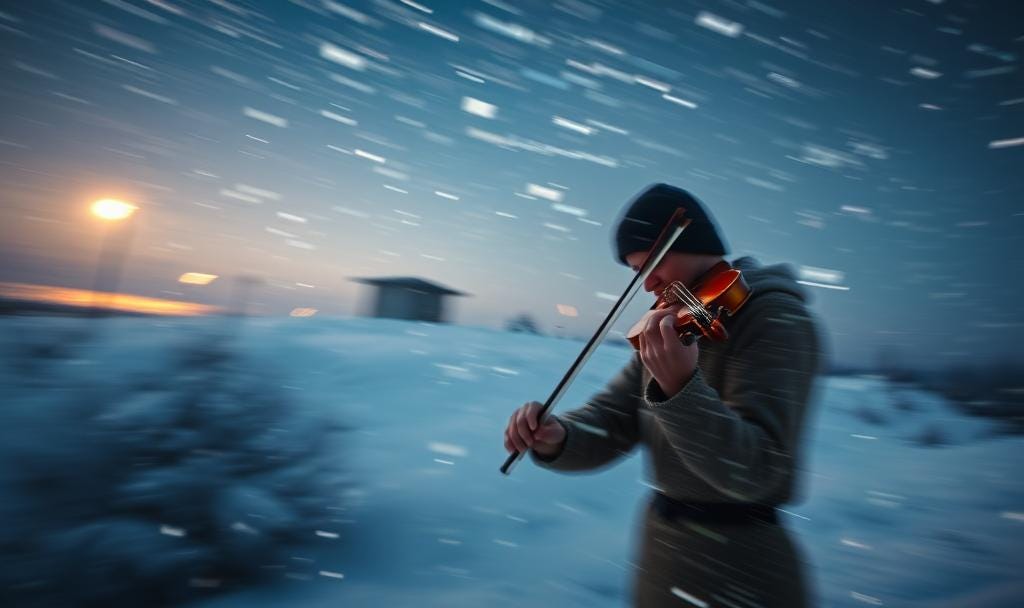
In the book Night, almost every page is filled with horror as Elie Wiesel recounts his story as a Jew during the Holocaust. There are, however, fleeting moments where beauty pierces through the darkness. One poignant example is the reference to music played by Juliek, a fellow prisoner:
“He was playing a fragment of a Beethoven concerto. Never before had I heard such a beautiful sound. In such silence…The darkness enveloped us. All I could hear was the violin, and it was as if Juliek's soul had become his bow” (73).
Beauty reminds you of what you’re fighting for.
4. I am allowed to talk to people who get it.
Being around others who care helps you feel less alone and less crazy. Finding just one person who holds the same tension of caring deeply and needing rest is a way to “double our joy, and divide our grief” (Cicero). I am reminded of the book, To Kill a Mockingbird, and how during the tense and confusing events surrounding the trial in Maycomb, Scout, Jem, and Dill rely on each other for understanding and reassurance. Their conversations and shared experiences help them process the injustice and fear they witness and makes them feel less alone in their confusion and distress (Harper Lee).
5. I am allowed to tell myself the truth.
You can’t stop injustice singlehandedly, but you can choose to live awake, open-hearted, and sane without losing yourself in the process. As Atticus tells Scout in To Kill a Mockingbird, “The one thing that doesn’t abide by majority rule is a person’s conscience” (Harper Lee) Following your heart is its own kind of resistance.
6. I am allowed to pray.
Prayer can be a way to steady yourself when the world feels shaky. Studies have shown that prayer and meditation can lower stress, reduce anxiety, and help regulate heart rate and blood pressure. According to a 2009 study published in the Journal of Behavioral Medicine, personal prayer was associated with greater psychological well-being and lower levels of distress.
Beyond the science, prayer offers something deeper. For many, it fosters a sense of connection, hope, and grounding when everything else feels out of control.
For example, one from The Book of Common Prayer that I have recited lately:
God our Creator:
We ask for your loving presence and for your peace to be with refugees in our local communities and around the world. Be with all who are in fear. Be with those whose lives and livelihoods are under threat, and whose religious freedoms are being compromised.
Be with us as we strive to enact your will in our welcome and support of refugees. Be with those in positions of leadership, that their decisions may bend toward peace and not division, and that they might realize the power they hold to do justice.
Give us all strength and courage. Equip and empower us to be witnesses to your love – as advocates and as servants, as ministers of welcome and bearers of hope, especially for those seeking refuge.
In your Holy name we pray. Amen.
There are many others. Find the one that resonates with you and see if it helps. Prayer and quiet acts of care remind us that meaningful change doesn’t always happen in grand gestures.
In Rebecca Mack’s article she quotes something Mother Teresa once said: “If you want to change the world, go home and love your family.”
Care doesn’t have to be loud or public to be meaningful. Sometimes the most powerful action starts quietly, at home, with the people right in front of us.
7. I am allowed to choose one small action.
Feeling helpless often comes from trying to fix everything. Choose one person, one organization, one issue to support through money, writing, or volunteer time. One tiny focus can give your empathy an outlet.
I’ve decided to follow one local politician on substack who has a list called “What you can do this week” and that’s what I do. If there are days I can do more, I will.
Lifting my head after so long in the sand felt disorienting. The world looks harsher in full view, and I’m often tempted to duck back down and pretend I didn’t see. But keeping my head down didn’t stop anything, it just left me unprepared.
So, I’m going to stand when I need to and rest when I need to. I’m going to focus on one thing I can do. I’m going to let beauty in and remember that loving my family and showing up for the people around me is also changing the world.
It’s not perfect, but it’s how I’m staying upright. It’s how I keep going.
I’m so glad you shared these thoughts and your process. It is, in itself, an act of fighting back. I love the tangible acts that help us stay sane!
Of course I feel the same way. I respect you so much for putting into words what so many of us are feeling right now. I wish I didn’t start from a place of feeling so beaten down, but I will try to do more than complain to myself.